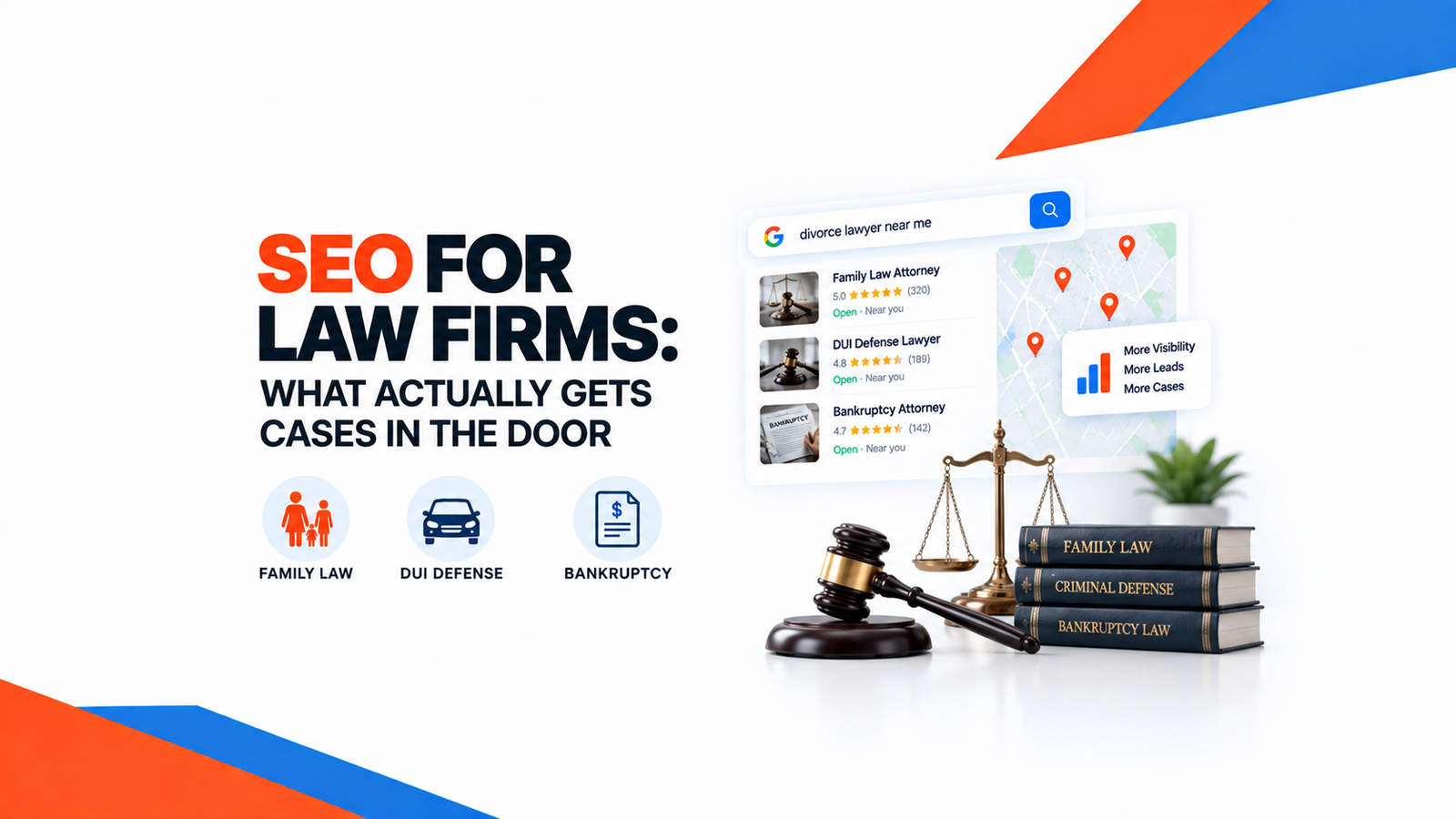
Good SEO for family law attorneys, criminal defense lawyers, and bankruptcy attorneys starts with recognizing they are not the same searcher. Search “do I need a lawyer for a DUI” and “how does the divorce process work in my state,” and you’ll notice something. The person typing one of those queries is in a completely different emotional state than the person typing the other. Family law, criminal defense/DUI, and bankruptcy are all “legal” practice areas, but they get found, and won, in very different ways.
Treating all three with one generic “law firm SEO” strategy is why so many attorney websites in these practice areas underperform. Here’s what actually works for each.
Same industry, three different searchers
| Practice area | Typical urgency | First question searched |
|---|---|---|
| Criminal defense / DUI | Immediate – often same-day or same-week | “DUI lawyer near me,” “do I need a lawyer for a first DUI” |
| Family law | Weeks to months of research before contacting anyone | “how does divorce work in [state],” “child custody lawyer cost” |
| Bankruptcy | Weeks of research, often driven by financial fear or shame | “will I lose my house if I file bankruptcy,” “chapter 7 vs chapter 13” |
That difference should shape everything from your Google Business Profile setup to what you write about.
Criminal defense & DUI: win the urgent, local, mobile search
Someone searching for a DUI attorney is often searching from a phone, sometimes within hours of an arrest, almost always locally. For this practice area:
- Speed to contact matters more than anywhere else in legal marketing. A phone number that’s one tap away, and ideally a live-chat or 24/7 answering option, converts far better than a contact form.
- Location-specific pages for each court or county you practice in, like “DUI attorney in [county] Superior Court,” match how people actually search when an arrest happened in a specific jurisdiction.
- Clear, calm process content, like “what happens after a DUI arrest” or “will I lose my license,” reduces panic and builds trust before the first call.
SEO for family law attorneys: earn trust over a longer research window
Divorce and custody searches usually happen weeks before someone calls a lawyer. That longer window rewards genuinely helpful, non-alarming content: how the process typically works in your state, what mediation involves, how child support is calculated, and what documents to gather before a first consultation. People researching family law want to feel prepared and understood, not sold to.
Reviews matter enormously here too, but differently than in criminal defense. Prospective clients read them for tone and empathy signals, like “she made a hard time easier,” not just win rates.
Bankruptcy: address the fear directly
Bankruptcy searches are often driven by financial stress, and a huge amount of that stress comes from misinformation. Myths about losing everything, ruining credit forever, or it being a moral failure are common. Content that plainly, non-judgmentally answers “will I lose my house,” “will I lose my car,” and “how long does bankruptcy affect my credit” does more to generate a genuine consultation than any generic “aggressive representation” tagline.
What all three practice areas share
- A complete, accurate Google Business Profile with the right practice-area categories and service list.
- Consistent name, address, and phone number across the website, GBP, and legal directories (Avvo, Justia, FindLaw).
- Genuine client reviews, responded to professionally, while staying mindful of attorney-client privilege in any public response.
- Clear, jargon-free explanations of process and cost, since “how much does this cost” is one of the top questions in every practice area.
Frequently asked questions
Do I need a lawyer for a first-time DUI?
In most states, a DUI carries real consequences, including license suspension, fines, and possible jail time, even for a first offense. The process involves both criminal court and a separate DMV or license proceeding. Speaking with a criminal defense attorney before your court date is strongly recommended, since outcomes often depend on details, like checkpoint procedure or breathalyzer calibration, that a non-lawyer wouldn’t know to look for.
How much does a divorce cost?
It varies enormously by state, whether the divorce is contested, and whether children and significant assets are involved. Uncontested, amicable divorces can cost a fraction of a contested divorce that goes through extended litigation. That’s why many family law attorneys offer a free or low-cost initial consultation to assess complexity first.
Will I lose my house if I file for bankruptcy?
Not necessarily. Both Chapter 7 and Chapter 13 bankruptcy include exemptions that can protect a primary residence, up to a certain equity amount depending on the state. Chapter 13 in particular is often used specifically to catch up on mortgage arrears while keeping the home. This is highly fact-specific, which is why an initial consultation matters.
What’s the difference between Chapter 7 and Chapter 13 bankruptcy?
Chapter 7 typically discharges most unsecured debt relatively quickly through liquidation of non-exempt assets. Chapter 13 involves a 3-to-5-year repayment plan instead, and is often used by people with regular income who want to keep specific assets, like a home, and catch up on missed payments.
How soon after an arrest should I contact a DUI attorney?
As soon as possible. Many states have a short window, sometimes as little as 10 days, to request a hearing that protects your driver’s license after a DUI arrest. That window is separate from the criminal case timeline, so early contact can preserve options that disappear if you wait.
Get a free look at how your firm’s marketing and local visibility currently stack up with Growthonics’ free digital marketing audit.
Learn more about how we support each practice area: family law marketing, criminal defense & DUI marketing, and bankruptcy attorney marketing.