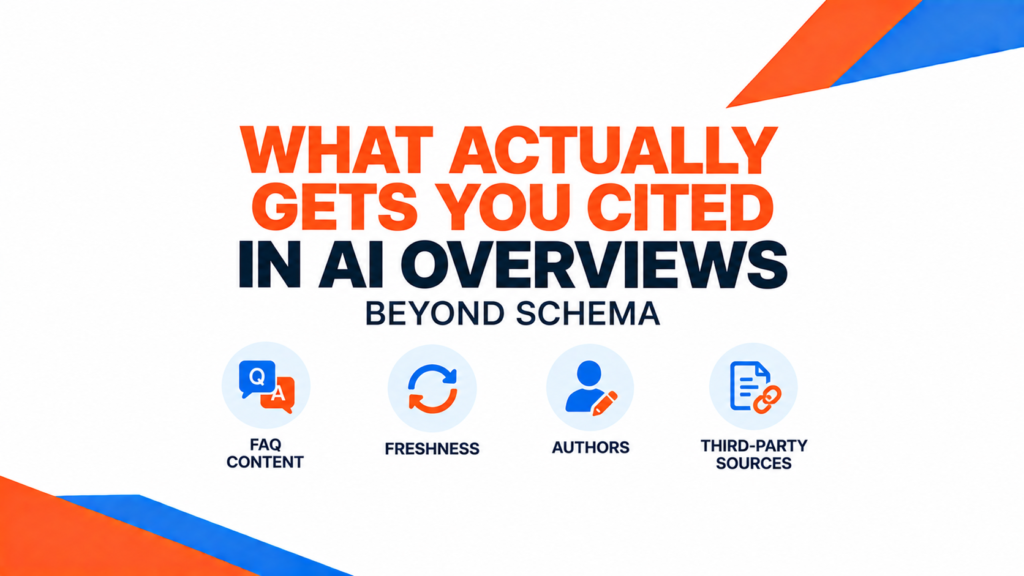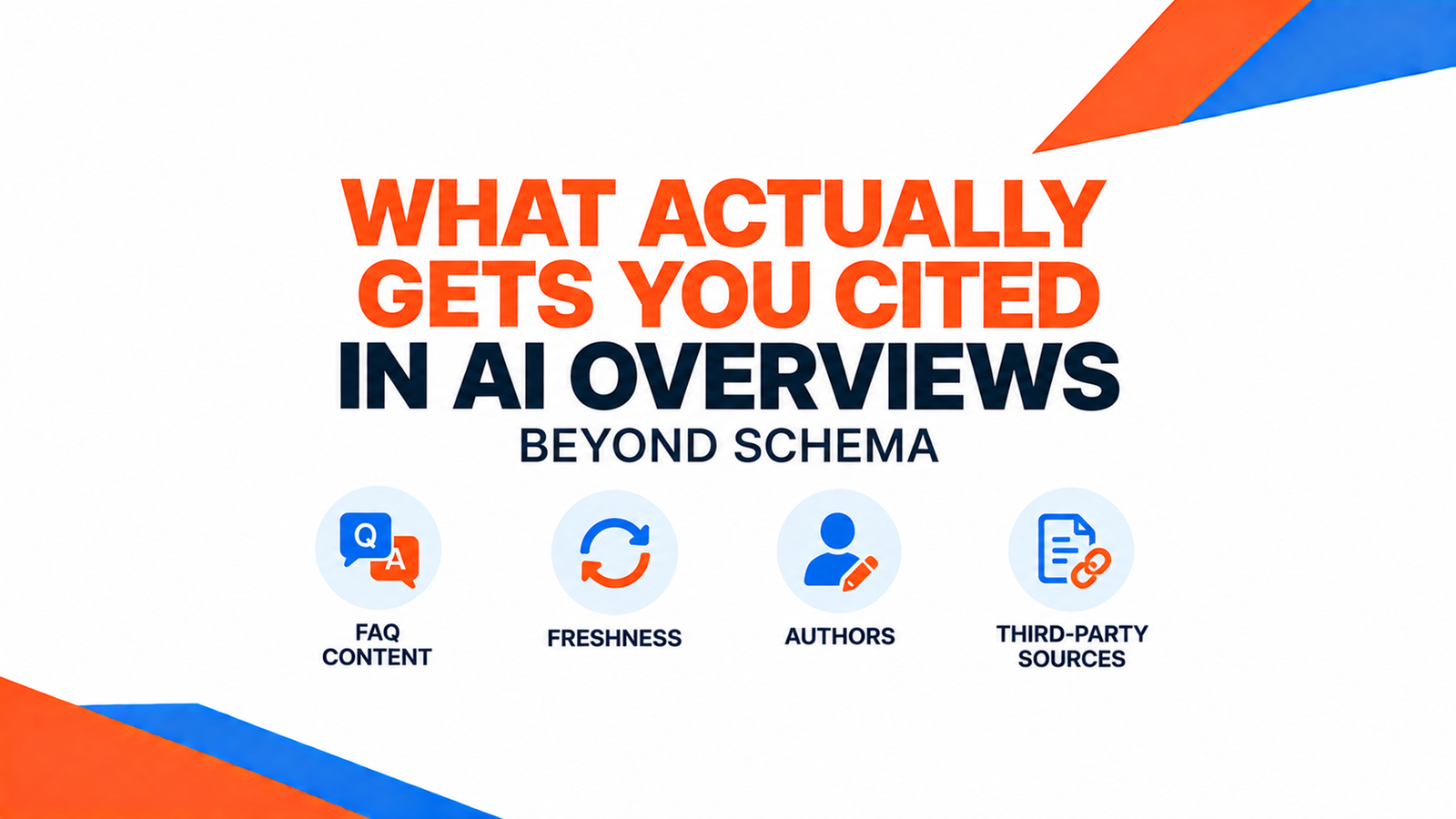
Schema markup is not what gets a page cited in AI Overviews. Google’s own May 2026 guidance states plainly that structured data isn’t required for AI Overviews or AI Mode. That doesn’t mean schema is worthless, it’s still worth having, but the research on what actually drives AI citations points somewhere else entirely: content format, freshness, authorship, and how many credible third-party sources mention you.
We added FAQ schema across our own site and wrote a full guide to it. Here’s what the research says actually matters beyond that step.
What the Research Actually Shows
A widely cited GEO (Generative Engine Optimization) research effort out of Princeton and IIT Delhi, the paper that effectively coined the term, found specific, measurable levers:
- Statistics and quotations: adding real statistics and quotations to content boosted visibility by roughly 40 percent and 41 percent respectively.
- FAQ-formatted content: content structured as a direct question followed immediately by a direct answer has the highest measured citation probability of any format tested, at roughly 81 percent.
- Front-loaded answers: content answering the query directly within the first 30 percent of the page accounts for an estimated 44 percent of LLM citations.
- Named authorship: a real byline with a title and a linked bio earns roughly 60 percent more AI citations than anonymous content.
- Freshness: pages updated within the last 30 days get roughly 3.2 times more AI citations than older content, while pages left untouched for a full quarter are about 3 times more likely to lose citations they’d already earned.
The Part Most Checklists Skip
None of the levers above are schema work. They’re editorial work: how content is structured, how often it’s updated, and who’s credited for writing it.
There’s also a piece that happens entirely off your own website. An estimated 85 percent of brand mentions inside AI search results originate from third-party pages, not the brand’s own domain. Brands with a presence across four or more third-party platforms are roughly 2.8 times more likely to get cited in AI responses than brands that only exist on their own site. Being technically perfect on your own domain counts for less than showing up credibly somewhere else, which is also why reputation management and AI search visibility have become the same conversation.
What This Looks Like in Practice
1. Structure new content as question-then-answer, not as a narrative that eventually gets there
Every one of the recent checklist-style posts on this blog, including the Google Business Profile checklist and the medical billing audit checklist, was written this way specifically because of this research.
2. Put a real name on new content when you can
A generic “team” byline is not wrong, but a named, credentialed author is measurably worth more in AI citations.
3. Set a refresh calendar, not a publish-and-forget one
Freshness isn’t a one-time task. A page that was accurate a year ago and hasn’t been touched since is actively losing ground on AI citations, even if nothing about it is factually wrong.
4. Build presence beyond your own domain deliberately
Directory listings, review platforms, and legitimate third-party mentions aren’t just for local SEO anymore. They’re a direct input into whether AI systems cite you at all.
Frequently Asked Questions
Is schema markup still worth adding if it doesn’t drive AI citations directly?
Yes. It costs little, helps traditional search understand your content, and Google’s guidance says it isn’t required for AI Overviews, not that it hurts. It’s just not sufficient on its own.
What’s the single highest-leverage content change for AI search visibility?
FAQ-formatted content has the highest measured citation probability of any format tested, at roughly 81 percent, according to the Princeton/IIT Delhi GEO research.
How often does content actually need to be refreshed for AI search?
Meaningfully within 30 days shows the strongest citation benefit, and content untouched for a full quarter is measurably more likely to lose citations it already earned.
Does a generic company byline hurt AI search visibility?
It’s not disqualifying, but named, credentialed authorship earns roughly 60 percent more AI citations than anonymous or generic bylines, according to the same research.